POD Shipping: The Second Item Costs 43% of the First
Verified first and additional-item shipping rates across 254 products: why one two-item order beats two single orders, and when it doesn't apply.
Two customers each buy one shirt. One customer buys two. Same revenue, same print cost — and in shipping, a difference of $2.55 to $6.60 depending on where the parcel goes.
Across the 254 products we hold shipping rates for, the second item in an order ships for a median 43% of the first item’s cost in the US. Every additional item after that is charged at the same reduced rate. That single mechanic is the strongest argument for bundles in print on demand, and it is priced into almost nobody’s listings.
| Two Bella Canvas 3001 tees | One order | Two separate orders | Saved |
|---|---|---|---|
| Canada | $10.58 | $17.18 | $6.60 |
| Rest of world | $14.39 | $20.78 | $6.39 |
| Australia | $8.08 | $13.38 | $5.30 |
| Germany | $5.08 | $7.78 | $2.70 |
| United States | $7.35 | $9.90 | $2.55 |
| United Kingdom | $5.58 | $7.18 | $1.60 |
Cheapest Printify provider per destination, verified 18 September 2026. CustomCat quotes only the US and a single international rate, so it cannot fill a per-country table.
The rate depends on the product, not just the country
The additional-item discount varies more by what you sell than where you send it:
| Product | First item | Each extra | Extra as % of first |
|---|---|---|---|
| Gildan 18000 | $7.39 | $2.29 | 31% |
| Otto Cap 39-165 | $4.69 | $2.00 | 43% |
| Gildan 5000 | $4.95 | $2.20 | 44% |
| Sport-Tek ST350 | $4.95 | $2.40 | 48% |
| Ceramic mug, 11oz | $4.99 | $3.00 | 60% |
Shipping inside the US, cheapest rate we hold for each across all six suppliers. Sweatshirts bundle best: a second Gildan 18000 adds $2.29 to a $7.39 first item, so two in one parcel save $5.10. An 11oz mug is the worst bundler in our data at 60% — two mugs in one parcel save just $1.99.
That inverts a piece of common advice. The cheapest product to ship on its own is not the cheapest to bundle. A Gildan 5000 is cheap to post once and comparatively expensive to double up, while a sweatshirt is dear to post once and cheap to double up.
The supplier changes the answer too
Printify’s second-item rate varies by provider and product. CustomCat charges by shipping class instead, and its apparel discount is steeper — a second lightweight garment costs $1.50 against Printify’s $2.40 on the same blank:
| Shipped inside the US | First item | Each extra | Extra as % of first |
|---|---|---|---|
| CustomCat, any lightweight garment | $4.99 | $1.50 | 30% |
| CustomCat, any heavyweight garment | $7.99 | $2.50 | 31% |
| Printify, Gildan 5000 tee | $4.95 | $2.40 | 48% |
| Printify, Gildan 18000 sweatshirt | $8.79 | $2.09 | 24% |
That inverts with basket size, which is the interesting part. On a single tee Printify is four cents cheaper. On two, CustomCat is 86 cents ahead; on four, $2.66:
| Gildan 5000 tees, one US order | 1 | 2 | 3 | 4 |
|---|---|---|---|---|
| Printify (cheapest of 11 providers) | $4.95 | $7.35 | $9.75 | $12.15 |
| CustomCat economy | $4.99 | $6.49 | $7.99 | $9.49 |
Sweatshirts run the other way. CustomCat starts cheaper and Printify’s lower second-item rate catches up by the third garment:
| Gildan 18000 sweatshirts, one US order | 1 | 2 | 3 | 4 |
|---|---|---|---|---|
| Printify | $8.79 | $10.88 | $12.97 | $15.06 |
| CustomCat economy | $7.99 | $10.49 | $12.99 | $15.49 |
Neither supplier is simply cheaper. If you sell tees in multiples, CustomCat’s additional-item rate compounds in your favour; if you sell sweatshirts in threes, Printify’s does. Worth checking against the blank price before you move a listing — the same blank, a different supplier table has the rest.
CustomCat’s economy is its cheapest of four tiers and it publishes no delivery estimate, so treat this as cheapest-against-cheapest rather than like-for-like on speed.
Where bundles pay most
| Destination | Median second-item rate | As % of first |
|---|---|---|
| Germany | $4.00 | 30% |
| Australia | $4.99 | 38% |
| United States | $2.39 | 43% |
| Canada | $4.39 | 45% |
| United Kingdom | $1.99 | 55% |
Printify’s per-country medians; CustomCat publishes no per-country rates. The proportional discount is deepest exactly where single-item shipping hurts most. A German or Australian customer buying two items is subsidised far more heavily than a British one. If you run “buy two” offers by market, run them hardest on the expensive destinations — the shipping economics are already on your side there.
The two conditions that break it
The reduced rate is not automatic. Printify’s own documentation on shipping costs for multiple items sets out the rule: the discount applies when items are the same product type and come from the same print provider. Otherwise each item is charged its full first-item rate.
In practice that means:
- A tee and a mug is not a bundle. Different product types, usually different providers. You pay $4.95 and then the mug’s full rate on top.
- Two tees from different providers is not a bundle either. If your listings are routed to different factories — easy to do by accident when you set them up months apart — the order splits and each parcel pays full freight.
- Two tees, same provider, same order is a bundle. $4.95 then $2.40.
Before designing a two-product offer, check both listings use the same provider. It is a thirty-second check that decides whether the bundle makes money.
What it’s worth on a real order
A three-shirt family order of Gildan 18000 sweatshirts in the US:
- Three separate orders: $8.79 × 3 = $26.37 shipping
- One order, same provider: $8.79 + $2.09 + $2.09 = $12.97 shipping
$13.40 kept on one order. At a 30% margin, you would need roughly $45 of extra sales to earn that back.
This is why matching-set listings work so well in Q4. A matching family Christmas shirt set is not just a higher order value — it is four garments paying one first-item rate. The same logic applies to ornaments, where buyers naturally want one per family member.
How to price it
Don’t discount the product to get the bundle. The shipping saving is already the discount. On the three-sweatshirt order above you keep $13.40 without touching the item price.
Do charge one shipping fee per order, not per item. Charging per item on a multi-item order overcharges the customer and costs you the conversion; the supplier is not charging you per item either.
Do set the threshold at two. Most “free shipping over $X” thresholds are set from cart value. In POD the mechanic that pays is the second unit, whatever it costs.
Check it against your own numbers in the profit calculator, with the shipping figure for your main market from the shipping cost tables.
What this data is
Two suppliers, verified 18 September 2026: Printify from its catalogue API, covering 194 products across 65 destinations, and CustomCat from the rate tables it publishes on its own site, covering 35 products to the US and one international bucket. 202 products in total. Comparisons use each supplier’s cheapest standard tier — Printify’s standard, CustomCat’s economy — never its faster, dearer one.
That is still two suppliers, not the market. The first-item and additional-item structure itself is near universal — Printful publishes flat rates on the same basis on its shipping page — so the strategy holds even if your supplier’s dollars differ. Confirm your own supplier’s additional-item rate before building offers on it.
Bottom line
The second item ships for a median 43% of the first — 31% on a sweatshirt, 60% on a mug — and the discount is deepest in the markets where shipping hurts most. Two items in one order beat two separate orders by $1.60 to $6.60 on a pair of tees, and by $13.40 on three sweatshirts.
Just make sure both items come from the same provider, or none of it applies.
Cheapest standard tier in USD — Printify’s standard from its API, CustomCat’s economy from its published tables — verified 18 September 2026. See how we source prices.
Current prices for the products in this post
Pulled from supplier APIs on every build, last verified Oct 19, 2026. If these differ from the figures above, trust these — the article reflects prices on the day it was written.
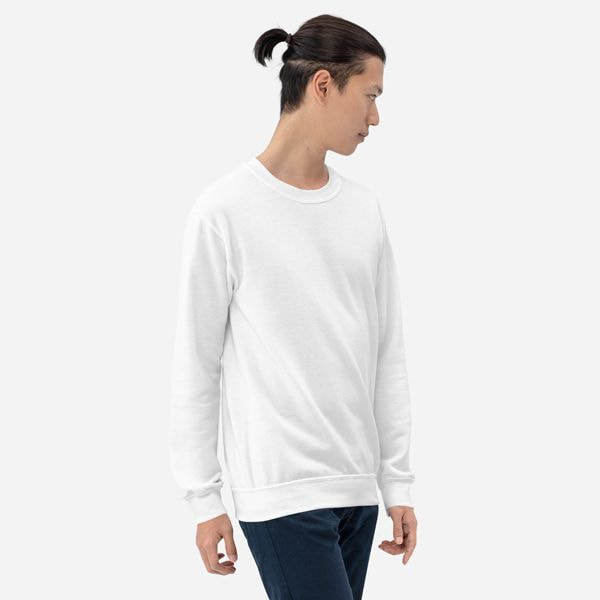

Other sweatshirt and t-shirt options worth comparing
Products of the same type we can price across multiple suppliers, ordered by how many suppliers carry them.
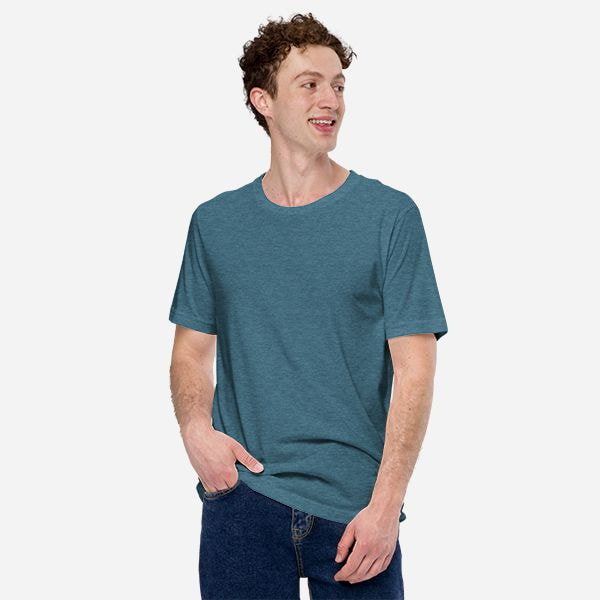
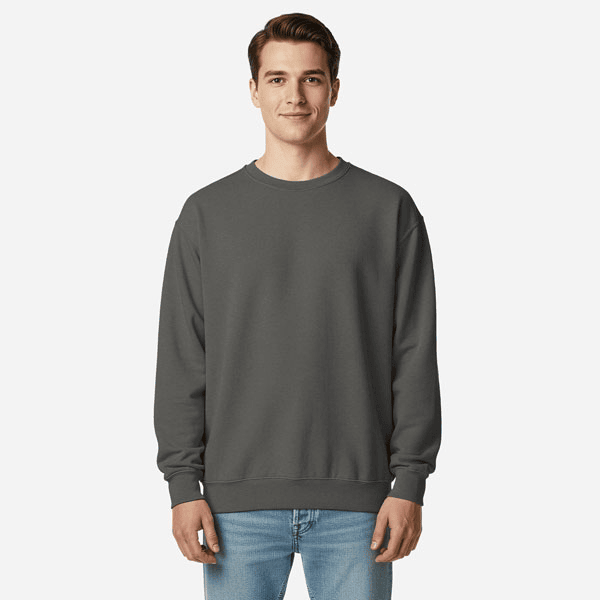
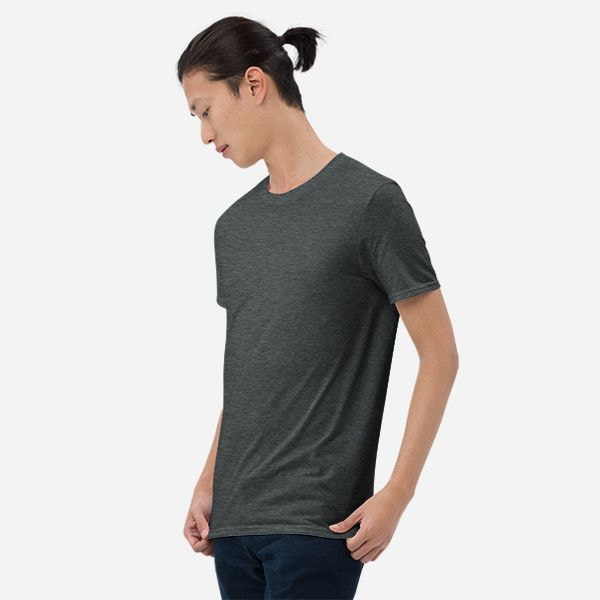

Related reading
- 🌍 Selling POD Outside the US: Shipping to CA, UK, EU, AU What it costs to ship print on demand to Canada, the UK, Europe and Australia — and why picking a provider near the buyer halves the bill and the wait.
- 📦 POD Shipping Costs by Country: US $4.95, Germany $3.89 What POD shipping really costs: 7,697 verified rates from two suppliers across 65 destinations, and why the factory moves the price more than the country.
- 👕 Matching Family Christmas Shirts: POD Set Costs What a 5-piece matching family Christmas shirt set costs on POD: $45.50 at Gooten, about $49 at Printify and Printful, $35.94 at CustomCat.
- 🖼️ Canvas vs Poster Photo Gifts: 16x20 at $13.86 vs $7.02 Canvas prints vs paper posters as POD Christmas photo gifts: verified prices for 7 sizes from 5 suppliers, same-size cost gaps and margin at each.
